 Remote work
- Remote teams in Pakistan cost less mainly because of lower overheads, and are only 3 hours ahead of South Africa.
- Protect yourself by paying in stages, keeping every account in your name and asking for live previews.
- Check a portfolio of live sites and get the scope and price in writing before you start.
We should say this first: we're a remote team based in Pakistan, so we're not neutral on this topic. But we'd rather you hire anyone remote with your eyes open than get burned by a bad experience. So here's the honest version, including the risks.
Why South African businesses hire remotely
The main reason is cost. Running a design team in Pakistan costs less than running one in Durban, so remote teams can charge less for similar work. For a small business, that difference can be the gap between a basic template and a properly designed site.
The second reason is availability. Good local designers are often booked up for weeks. A remote team with more capacity can usually start sooner.
The third is experience. Many Pakistani teams have spent years building sites for clients in the UK, the Middle East and elsewhere, so they're used to working with businesses they'll never meet in person.
The time zone works in your favour
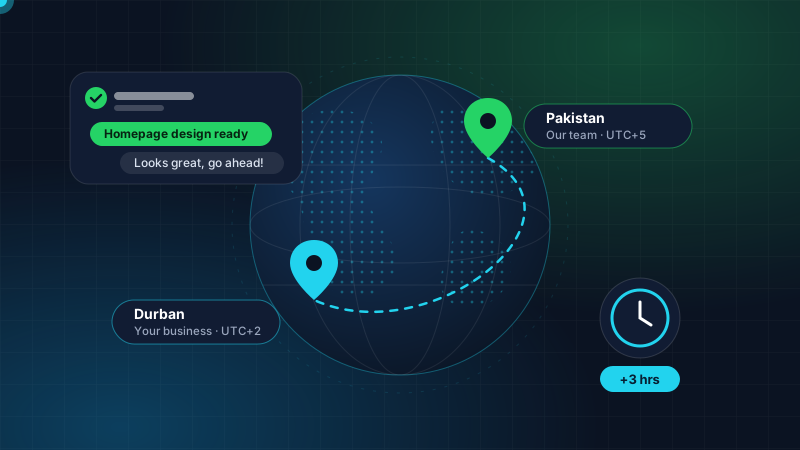
Pakistan is only three hours ahead of South Africa. That's a much smaller gap than working with someone in the US or Australia. Our working day runs from 6 AM to 7 PM South African time, so if you send a message at 9 AM, we've already been working for a few hours.
The real risks
It would be dishonest to pretend there aren't any. These are the ones to watch for:
- Disappearing freelancers. Someone takes a deposit and stops replying.
- Lock-in. Your domain or hosting ends up registered in the designer's name.
- Communication gaps. You ask for one thing and get another, because nobody checked what you meant.
- Hidden extras. The quote looked cheap, but every change after that costs more.
None of these are unique to remote work. Plenty of local designers have done all four. But when someone is in another country, it's harder to sort out, so it pays to protect yourself from the start.
How to protect yourself
Pay in stages
Never pay 100% upfront. A fair setup is a deposit to start and the balance once you've seen and approved the work. Bigger projects can be split into more milestones.
Keep everything in your name
Register the domain yourself, or make sure it's registered to you. The same goes for hosting, Google accounts and any paid plugins. The designer can work through access you give them, and you can remove it later.
Ask for live previews
You should be able to open a preview link on your own phone and see real progress, not just screenshots. That way there are no surprises at the end.
Get it in writing
A short written scope that lists the pages, features, rounds of changes and price protects both sides. WhatsApp messages count, but a proper quote is better.
Check their work
Ask for a portfolio with live links, not just images. Look at the sites on your phone. Check reviews on their social pages or Google if they have them.
Paying a team overseas
Payments usually go through an international transfer, a service like Wise or Payoneer, or a card payment. Ask which methods they accept and whether any fees apply, and keep proof of every payment.
How we do it
For what it's worth, this is how we work with clients in Durban. You pay a deposit to start and the balance only after you approve the design. Your domain, hosting and logins are always in your name. You get live previews throughout, and you talk directly to the designer or developer on WhatsApp.
We've been doing this for more than ten years. If you have questions about how a remote project would work for your business, send us a message. Even if you end up hiring someone else, we're happy to help you ask the right questions.

Written by the Web Design Durban team
We're a remote team of expert freelance designers, developers and marketers based in Pakistan, working with businesses in Durban and across South Africa. We've been building websites for more than 10 years and have delivered over 300 projects. Low-cost rates, direct WhatsApp contact and no lock-in.
See our services